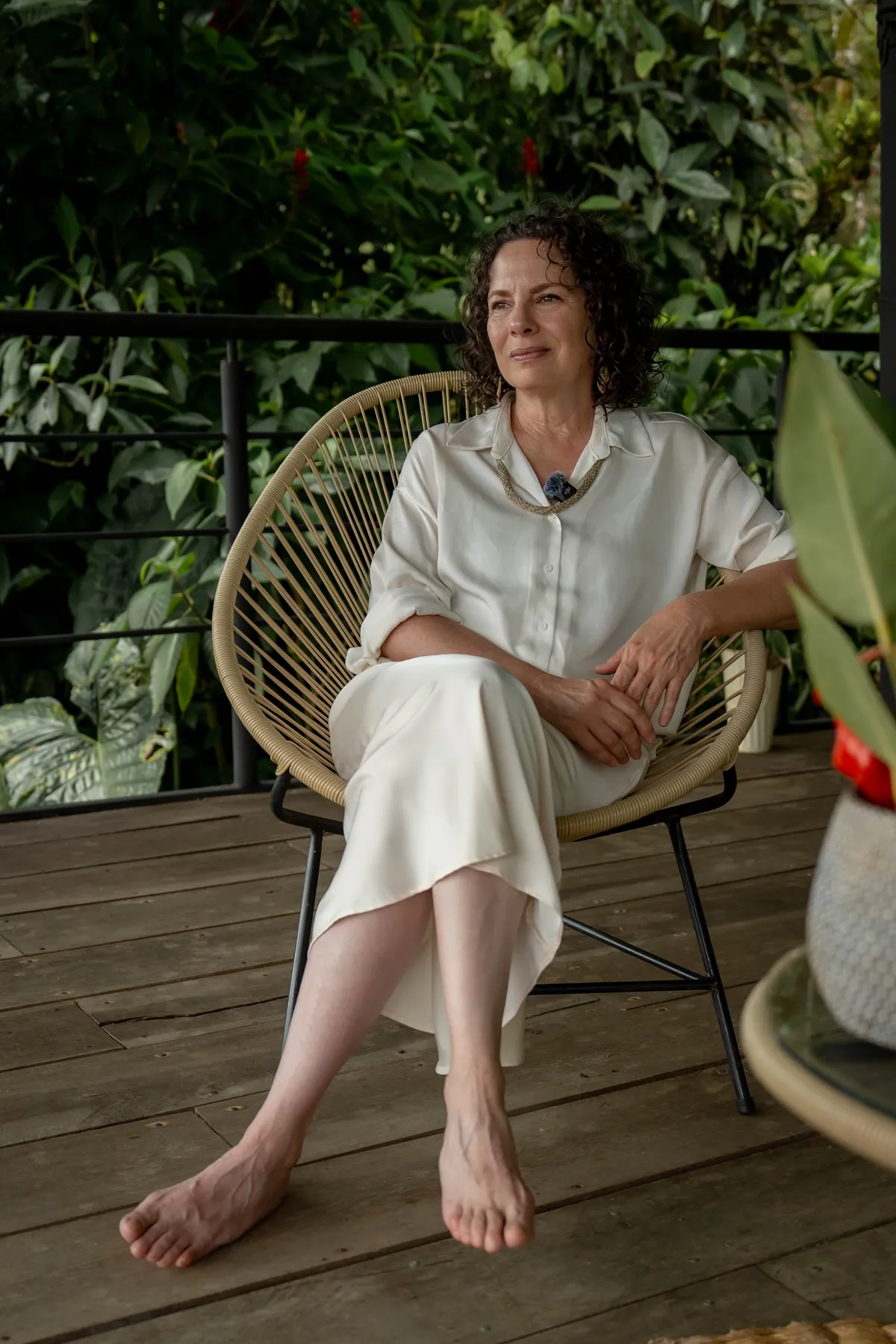
By Dra. Isabel Azorey, anaesthesiologist, functional medicine physician and Master in Neural Therapy
Some pains move in and stay. They appear one day, they come back, they change place. We try painkillers, tests, specialists. Sometimes the results come back normal, and still the body keeps saying that something is not right.
If you recognise yourself in these lines, neural therapy may be a door you have not opened yet. It does not treat only the place that hurts: it looks for the source of the signal that keeps the body caught in discomfort, and it helps the body remember how to find its balance.
What is neural therapy?
Neural therapy is an integrative therapy that works through the nervous system to help the body recover its natural capacity to regulate itself.
It was born in Germany in 1925, when the physicians Ferdinand and Walter Huneke noticed something surprising: when they applied a small dose of procaine, a local anaesthetic, at a point that seemed far from the problem, some patients felt relief within seconds. Since then, neural therapy has grown in Europe and Latin America, and today it is practised in many countries as part of integrative medicine.
Its principle is simple and deep at the same time: the body is a connected network, and what happens in one part can show up in another.
How it works
The autonomic nervous system is the silent conductor of your body. It regulates breathing, digestion, circulation, sleep, the stress response and inflammation, without you having to think about it.
Over a lifetime, that system can be disturbed by what neural therapy calls interference fields or irritative foci: areas that send constant alarm signals, even when they do not hurt. They can begin in:
- Scars from surgery, wounds, childbirth or vaccines
- Treated teeth, extractions or old infections
- Repeated tonsillitis or sinusitis
- Blows, fractures and past injuries
- Intense emotional experiences that the body still holds
When these signals build up, the nervous system loses its balance and discomfort appears, often far from its source: an old scar can be behind back pain, or a treated tooth behind a migraine.
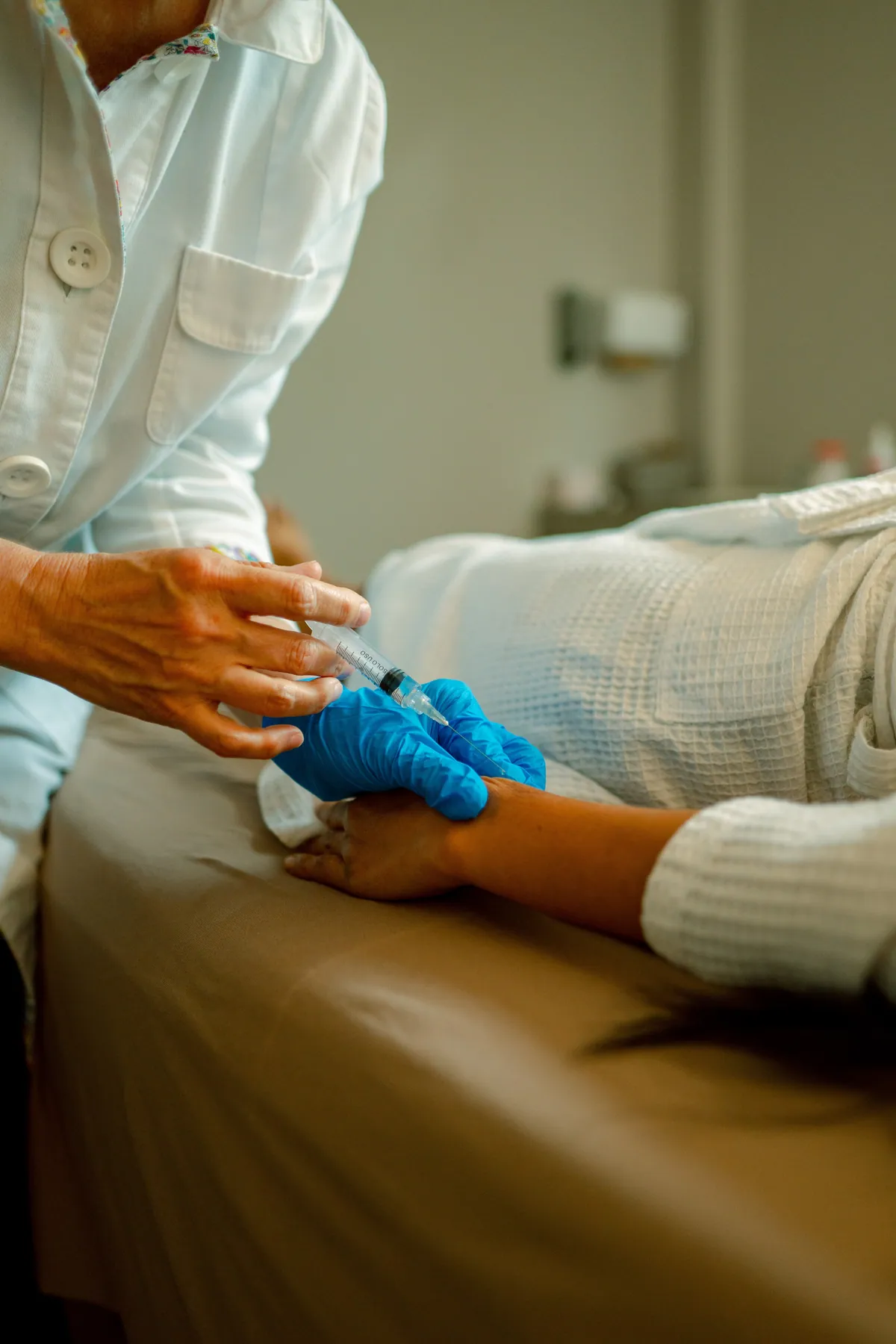
Diluted procaine, applied at the precise point, helps interrupt that alarm signal. The nervous system then has the chance to reorganise itself, and with it, the functions of the body’s different systems.
What a session at Vibra is like
- We listen to your life story. Before any application, we take the time we need to get to know you: your symptoms, your surgeries and scars, your dental treatments, your past illnesses and the moments that marked your life. Every detail counts, because that is where the likely irritative foci tend to hide.
- We find the points to treat. With that story and the clinical assessment, we choose the places where the body needs help: a scar, a dental area, a segment of the spine or points related to the symptom.
- We apply the procaine. We place small doses of diluted procaine under the skin or under the mucosa, with very fine needles. The feeling is brief, like a gentle pinch.
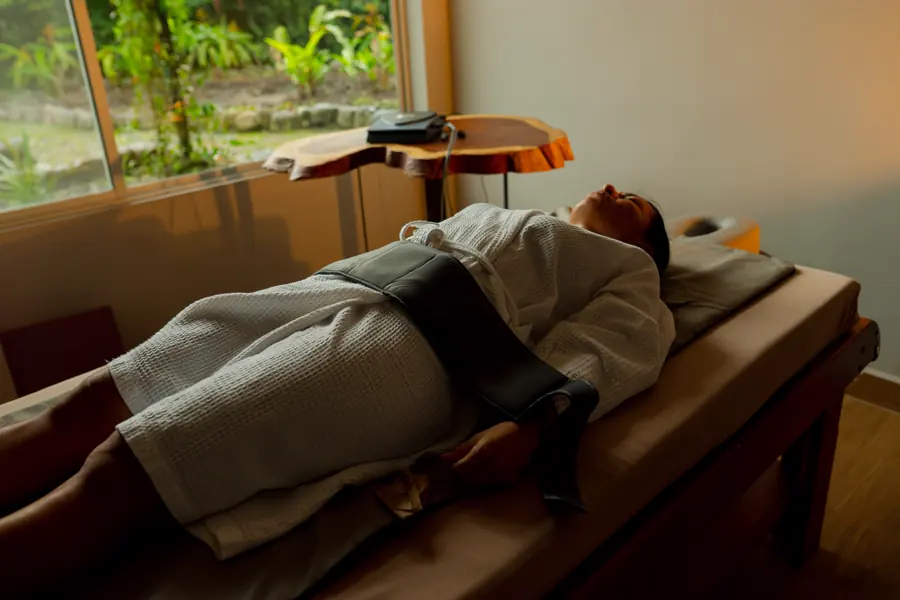
- We watch the response. Many people notice changes in the same session: the pain eases, the body relaxes, or a feeling of warmth and lightness appears. Depending on each case, several sessions may be needed.
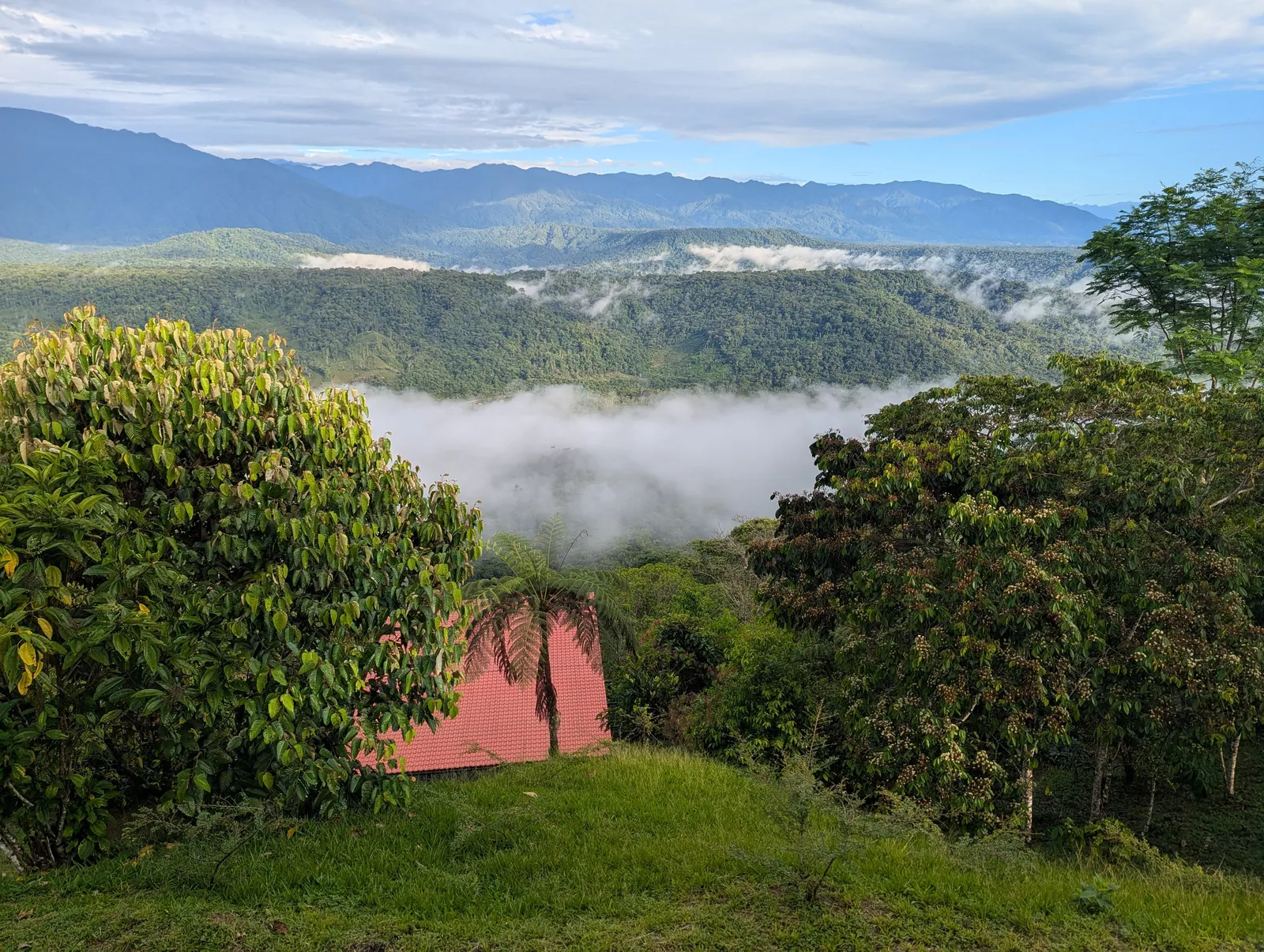
It all happens in a calm setting, facing the forest, with the quiet the nervous system needs in order to respond.
What neural therapy can do for you
In our clinical experience, the great majority of people feel notable relief from pain, and in many cases the pain goes away. When the nervous system recovers its balance, the benefits often reach beyond the symptom:
- Pain relief, often from the first session
- Less inflammation and better circulation in the treated area
- Deeper, more restful sleep
- Better digestion and better function of the body’s different systems
- More energy and a feeling of inner calm
- Less reliance on painkillers, always together with your doctor
Who is it for?
It can help you if you live with:
- Back, neck or shoulder pain that never quite goes away
- Migraines or frequent headaches
- Persistent joint or muscle pain
- Discomfort in scars or in areas that were operated on
- Functional digestive disorders
- Stress, tension or a nervous system that cannot rest
Every body responds in its own way. That is why each treatment is designed for the person, never with a standard protocol.
Frequently asked questions
Does it hurt?
The application is made with very fine needles and feels like a brief pinch. Most people tolerate it very well.
Is it safe?
Procaine is a local anaesthetic that medicine has used for more than a century, and in neural therapy it is applied in very small, diluted doses. It is applied by a physician with more than 30 years of clinical experience. Before each treatment we review your history to rule out allergies to local anaesthetics or other contraindications.
How many sessions do I need?
It depends on each person and on how long the discomfort has lasted. Some people feel a deep change in one session; others need several. We explain it clearly from the first consultation.
Does it replace my medical treatment?
No. Neural therapy complements conventional medicine. Never stop a medication without talking to your doctor.
Your body knows how to find its balance
Sometimes it only needs someone to find the signal that keeps it caught. At Vibra, neural therapy happens in the middle of the Amazon forest, with time to listen to you and care designed only for you.
You can receive it as part of A stay made to measure or in the Vibra Deep Wellness programme.
Book your consultation with Dra. Isabel Azorey · Discover Vibra Deep Wellness
This article is for information and does not replace a personal medical assessment. Translated from Spanish.